Weather, sensors and your data.
Connected to your assets.
Bring weather, sensor readings and other operational data into one view. Alert on a single source, or combine multiple sources in rules built around your assets and operating limits.
Choose how your team connects.
Use OmniWatch for maps, dashboards and alerts. Use the APIs to connect asset data and bring the results into your own systems.
OmniWatch — the app
A ready-to-use, configurable operating picture for your whole organization. Secure sign-in, role-based access, localization and per-user settings — nothing to build.
Take the tourDevelopers & APIs
Connect assets, sensors and other operational data feeds. Pull weather and hazard data, configure alert rules, receive webhooks, or embed OmniWatch in your own product.
Explore the APIsDeployment and integration are measured in hours and days. Start with a single site or extend across continents, with configurable views and thresholds for each team.
Weather & Operational Data
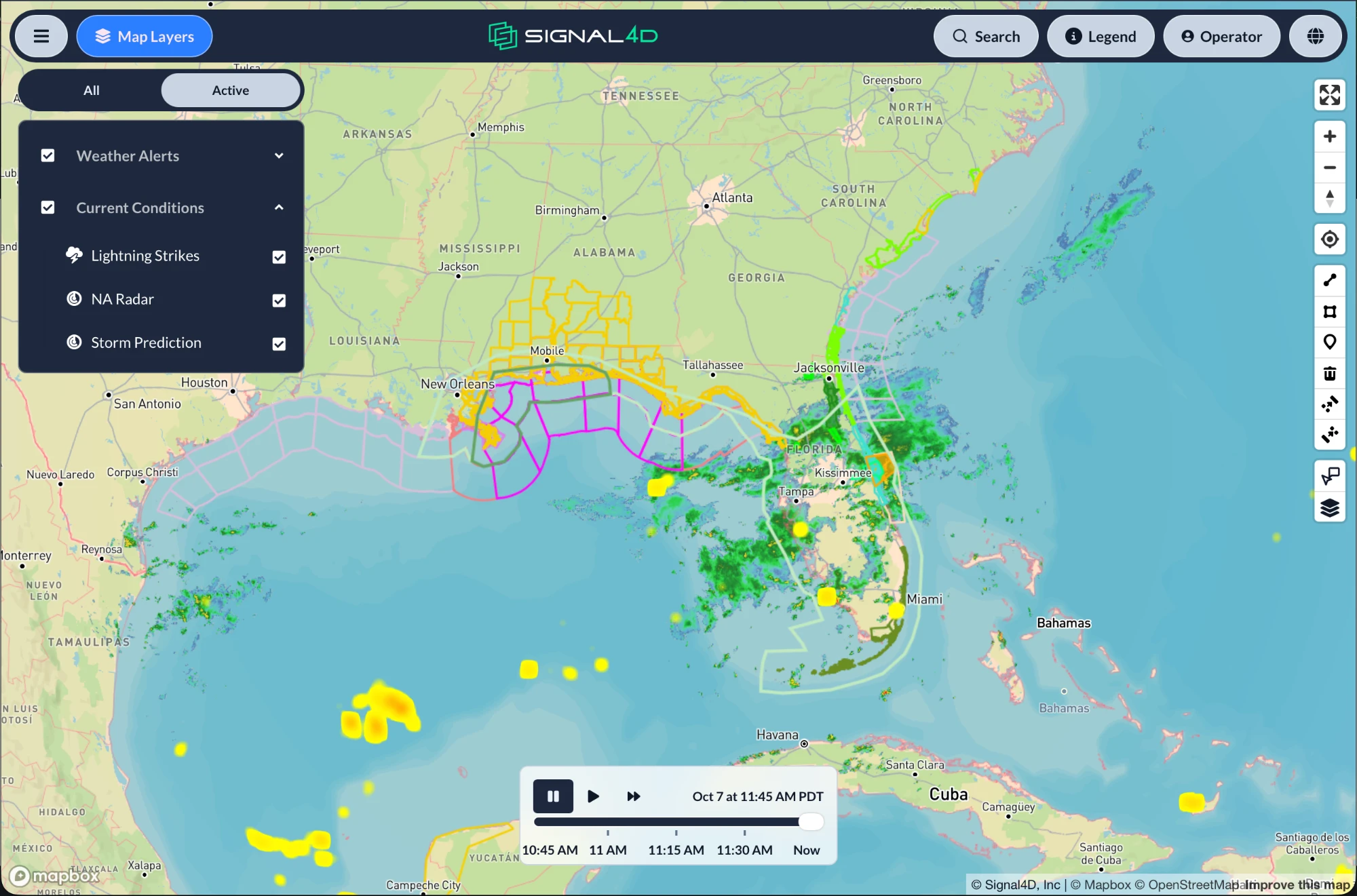
Bring weather models, observations, radar, lightning and satellite detections together with sensor readings and other operational data feeds. Monitor each source on its own or use it as an input to a combined alert.
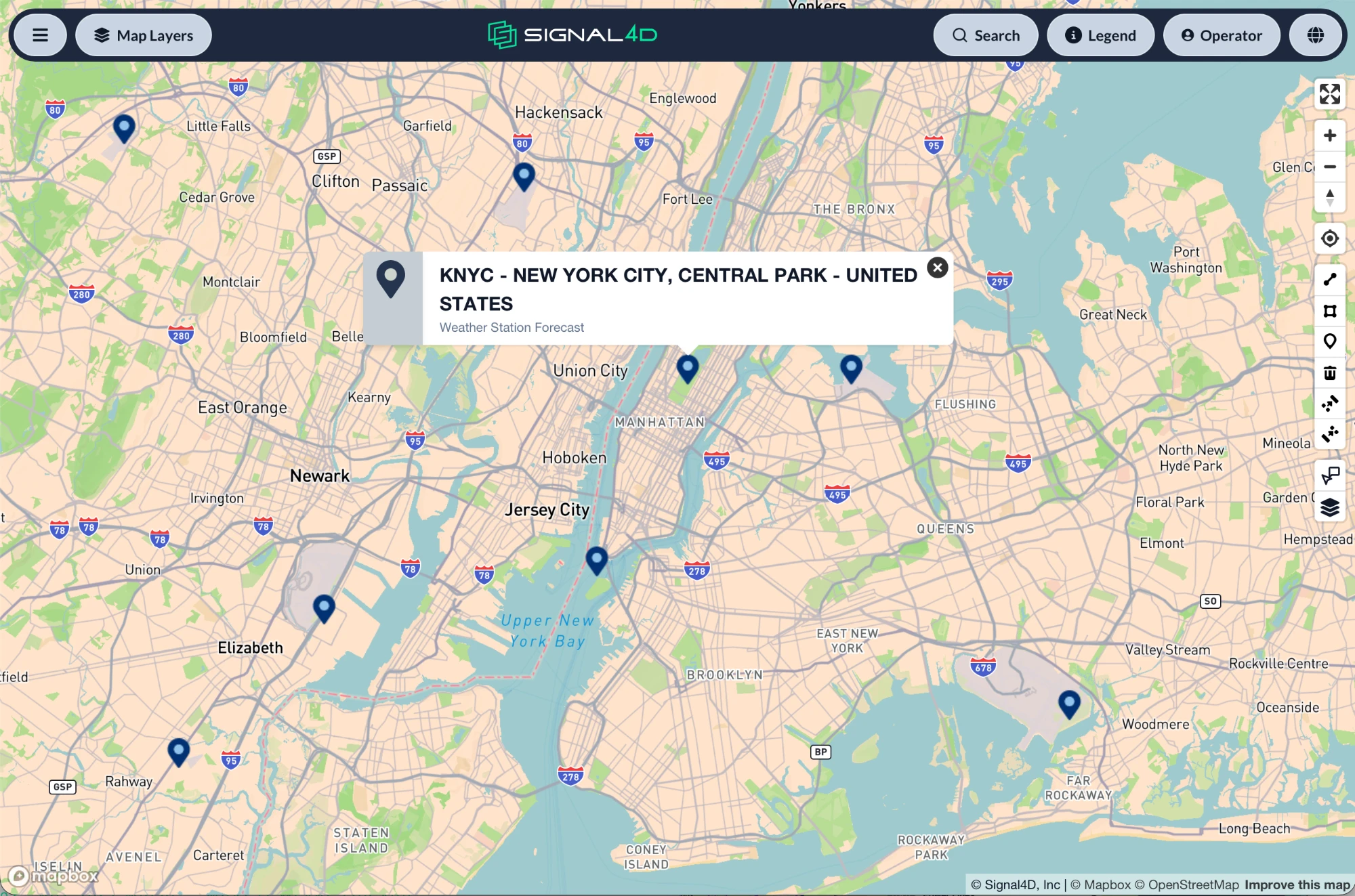
- Weather models, local stations and surface observations
- Connected sensors and operational data feeds
- ADS-B air traffic, traffic incidents and drone activity
- Radar — continental, regional and single-site super-resolution
- Global lightning strikes and density
- Storm tracks, cells and severe-storm prediction
- Satellite hot spots, fire and agency fire data
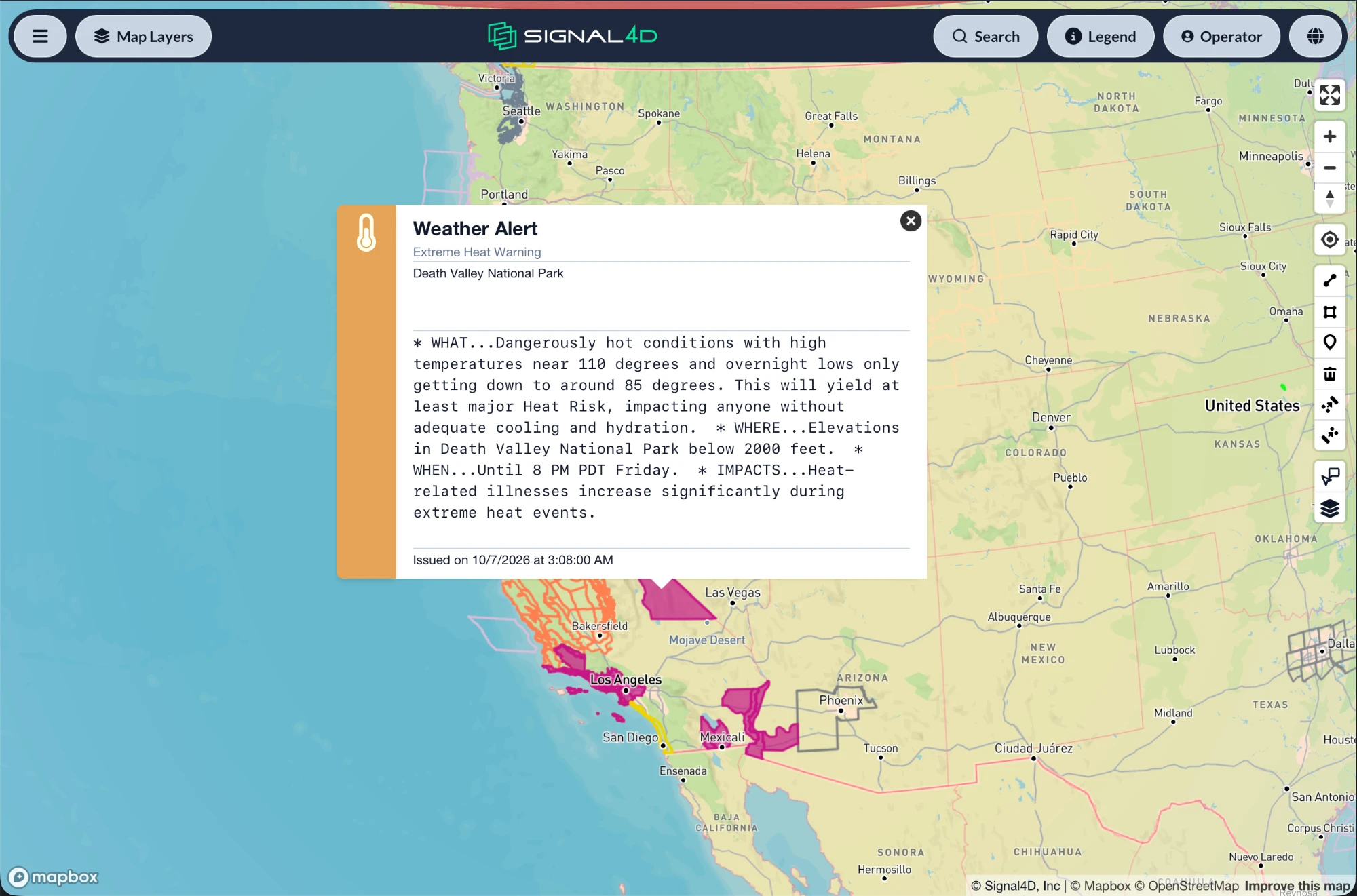
- Government weather alerts, hail, flood and air quality
Asset & Infrastructure Modeling
Add facilities, networks, routes and land to the map through the APIs. Connect live telemetry to track moving assets alongside developing weather and hazards.
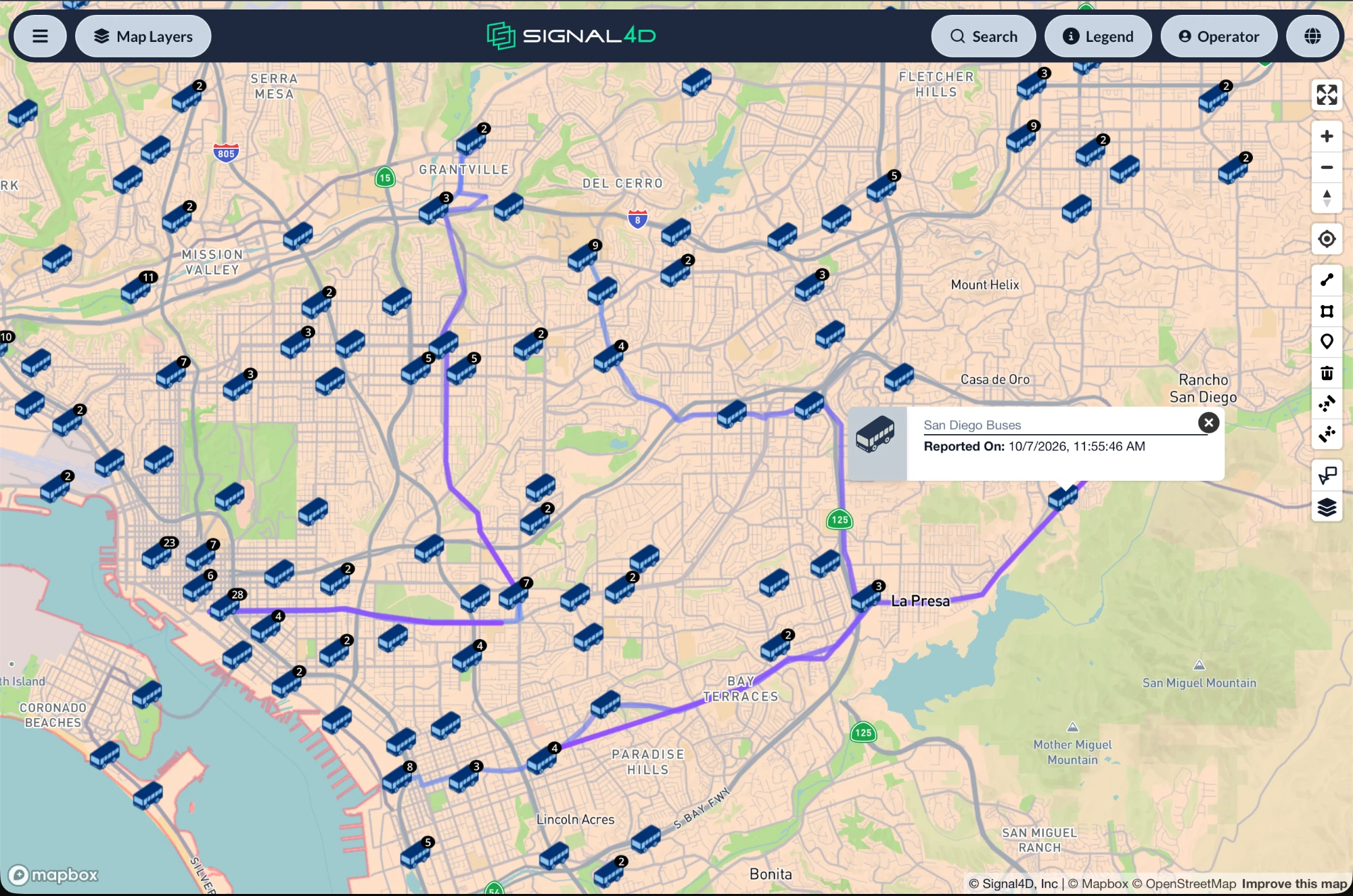
- Moving assets updated live by telemetry — fleets, vehicles, vessels, aircraft, drones and personnel
- Static assets: plants, substations, power lines, pipelines
- Networks: supply lines, trucking routes, distribution centers, ports
- Land: forested holdings, parcels and service territories
- Store and replay full history paths
Impact Intelligence
We overlay the environment onto your assets to compute current and forecast impact, down to the specific segment, asset, location and timing.
- Which power-line segment, which vehicle, which facility
- Specific locations with timing — now and ahead
- Risk profiles for infrastructure and assets
- Historical and predictive analytics and modeling
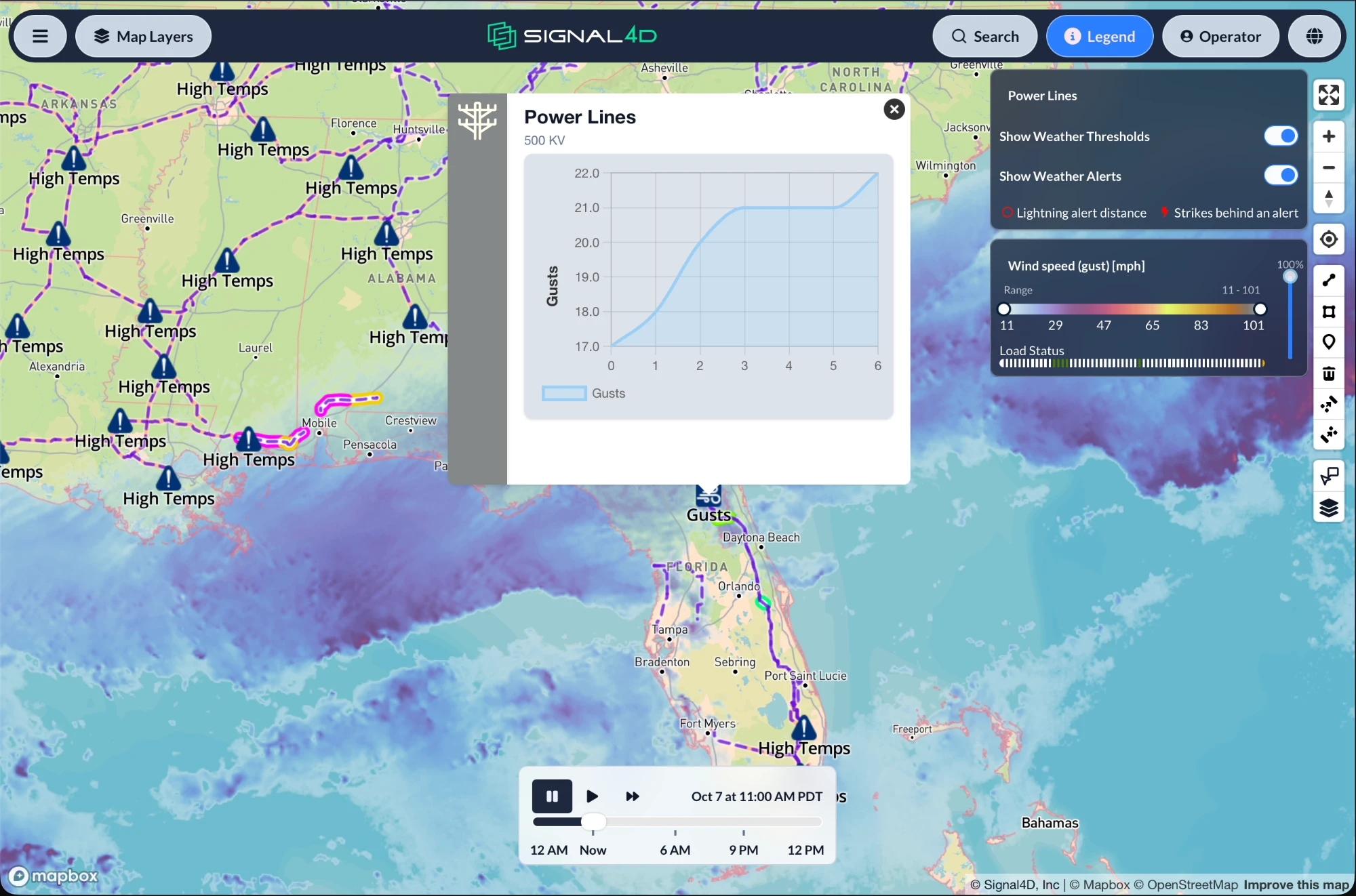
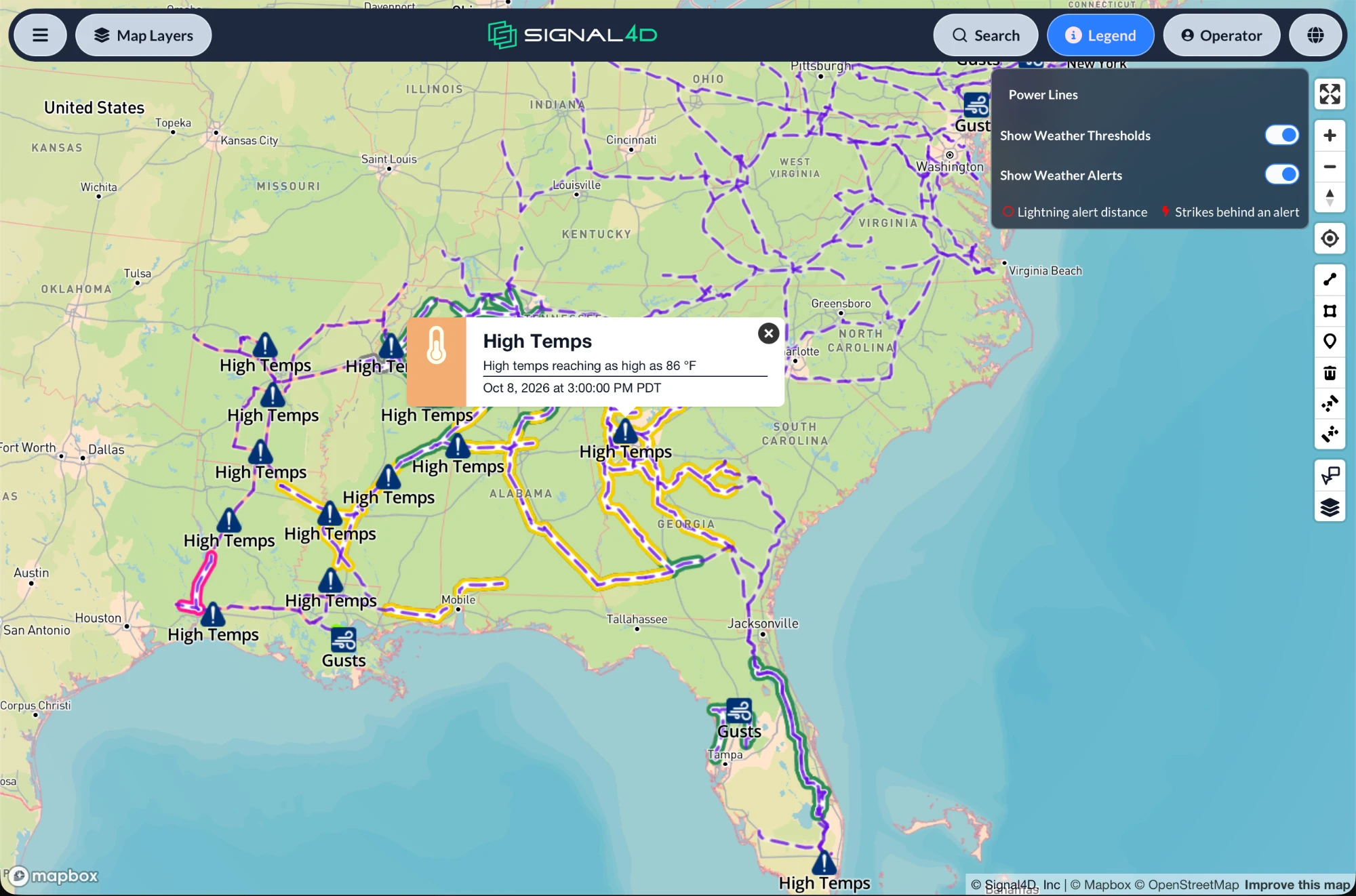
Compound, Multi-Source Alerting
Trigger an alert from one data source, or combine weather, sensor readings and other inputs in a multi-condition rule. Set the logic around the asset and the conditions your team needs to investigate.
- Single-source alerts on weather, sensors or other connected data
- Wind gusts above 30 knots AND a sudden drop in tension reported by dynamic line rating sensors
- A lightning strike AND smart line sensors triggering
- Compound events (red-flag warning + lightning + satellite hot-spot near an asset)
- Custom thresholds per asset, route or territory
- Dynamic monitoring zones — drawn by users or generated automatically as conditions evolve
- Delivered via interactive map, dashboard, email, SMS and mobile
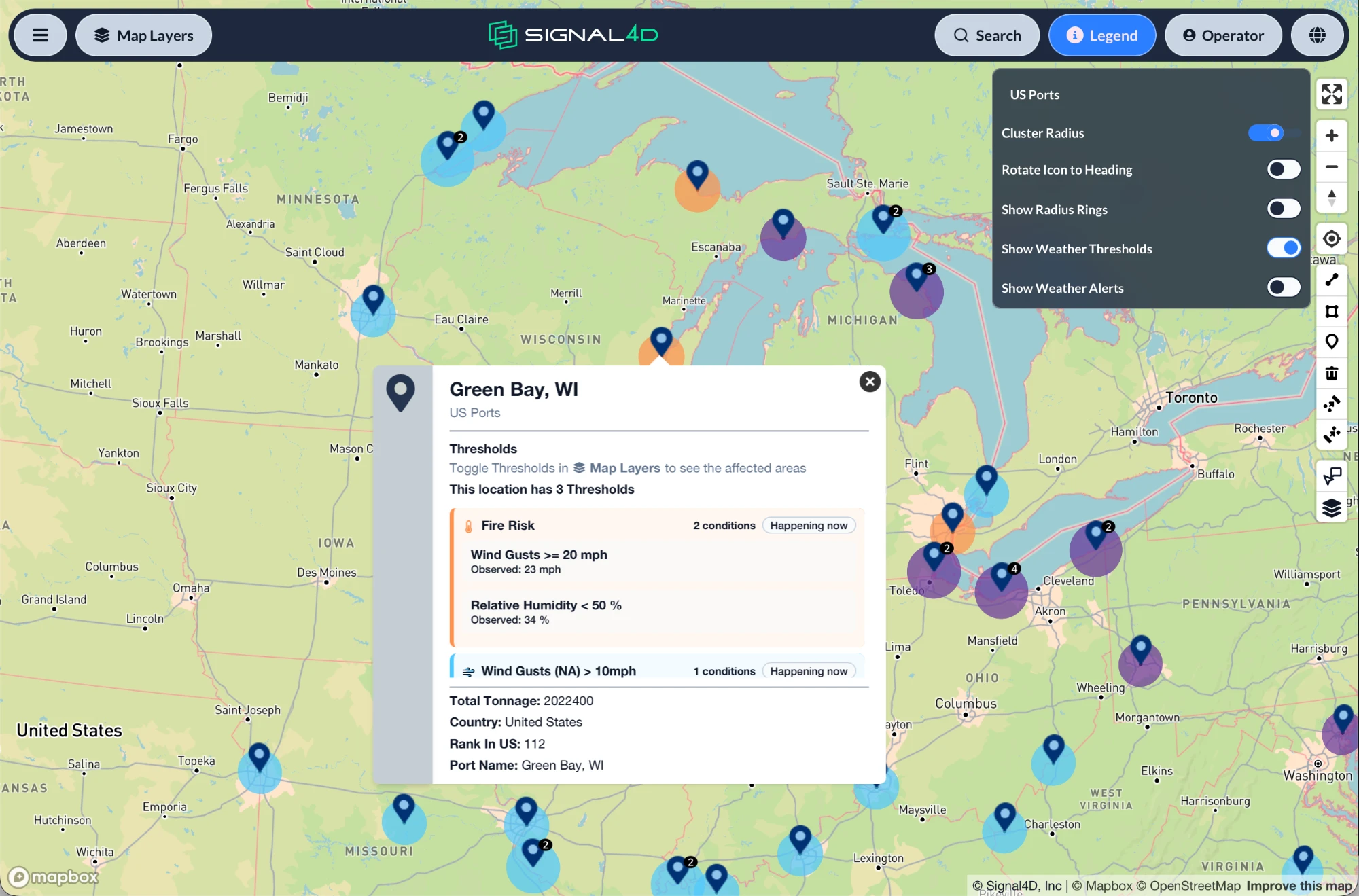
Common Operating Picture
A shared, role-based view from the operations center to the field — configurable, secure, and built to embed.
- Deployed enterprise-wide: ops center, desktop and field
- Role-based access, tenant management and localized interfaces
- Integrate GIS, asset-lifecycle and fleet-telemetry systems
- Consolidate enterprise IoT: weather stations, cameras, drone sensors
- Developer portal and APIs for programmatic integration and embedding
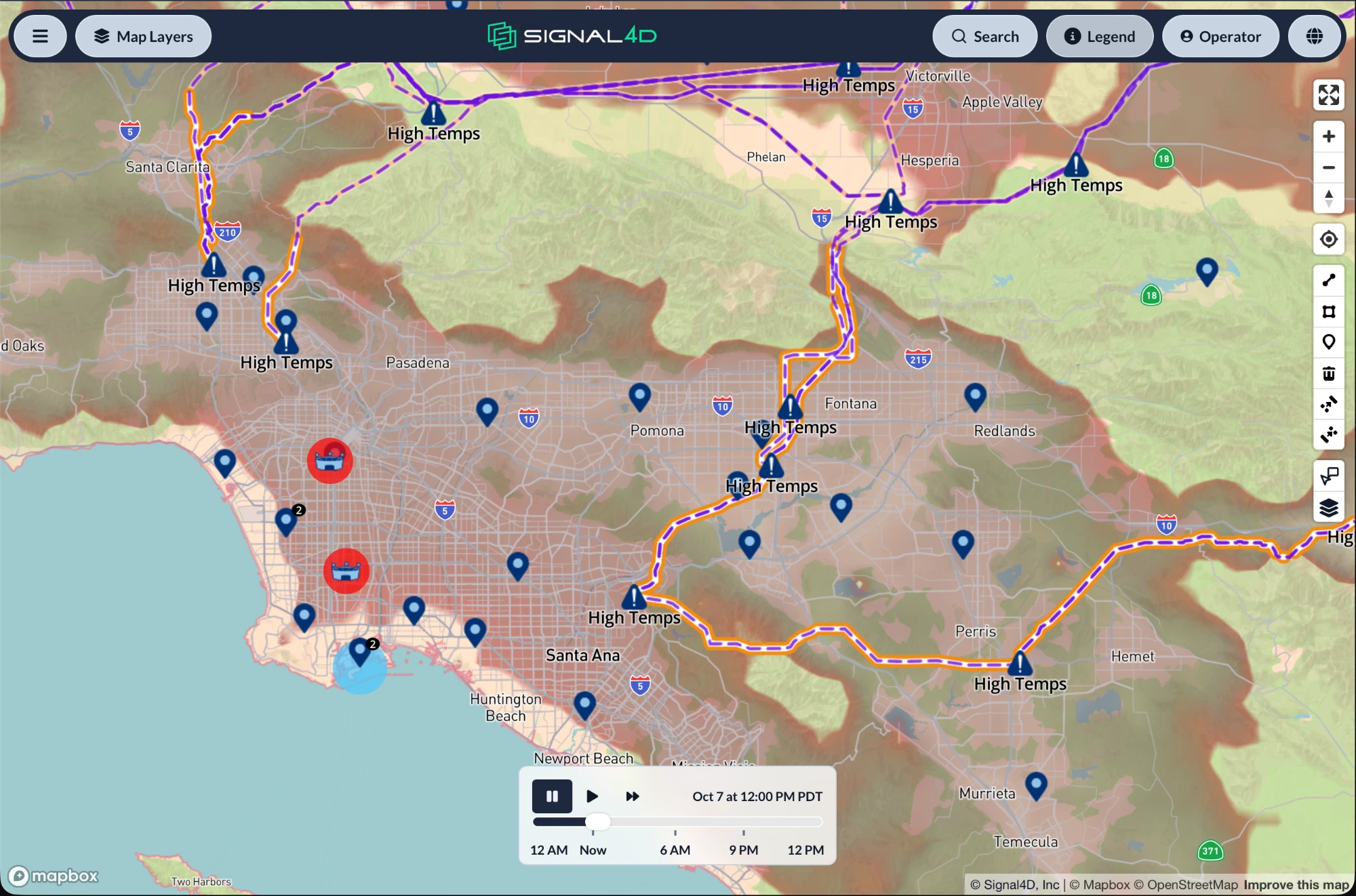
Connect monitoring with your response.
Signal4D doesn’t stop at the alert. Create events, notify the right teams, launch a drone for verification, stream live video into the picture, and coordinate the response — all in one place.
Fit the platform to your team.
Custom thresholds
Set the conditions that matter per asset, route or territory.
Enterprise & user access
Role-based access and tenant management across the organization.
Enterprise integrations
Connect GIS, asset-lifecycle and fleet-telemetry systems.
Consolidate IoT
Connect line sensors, weather stations, cameras and other operational data sources.
Weather models, observations and warnings in one place.
Signal4D combines multiple global sources: weather and forecast models, radar, lightning, satellite, surface observations, government alerts, fire and traffic — with full source attribution.
That includes data from close partners like Spire, whose global satellite weather observations extend coverage to the open oceans and remote regions other networks miss.
Let’s look at your operation.
See how the platform maps onto your assets, your data and your decisions.